Capital, facilities should be directed toward production: minister
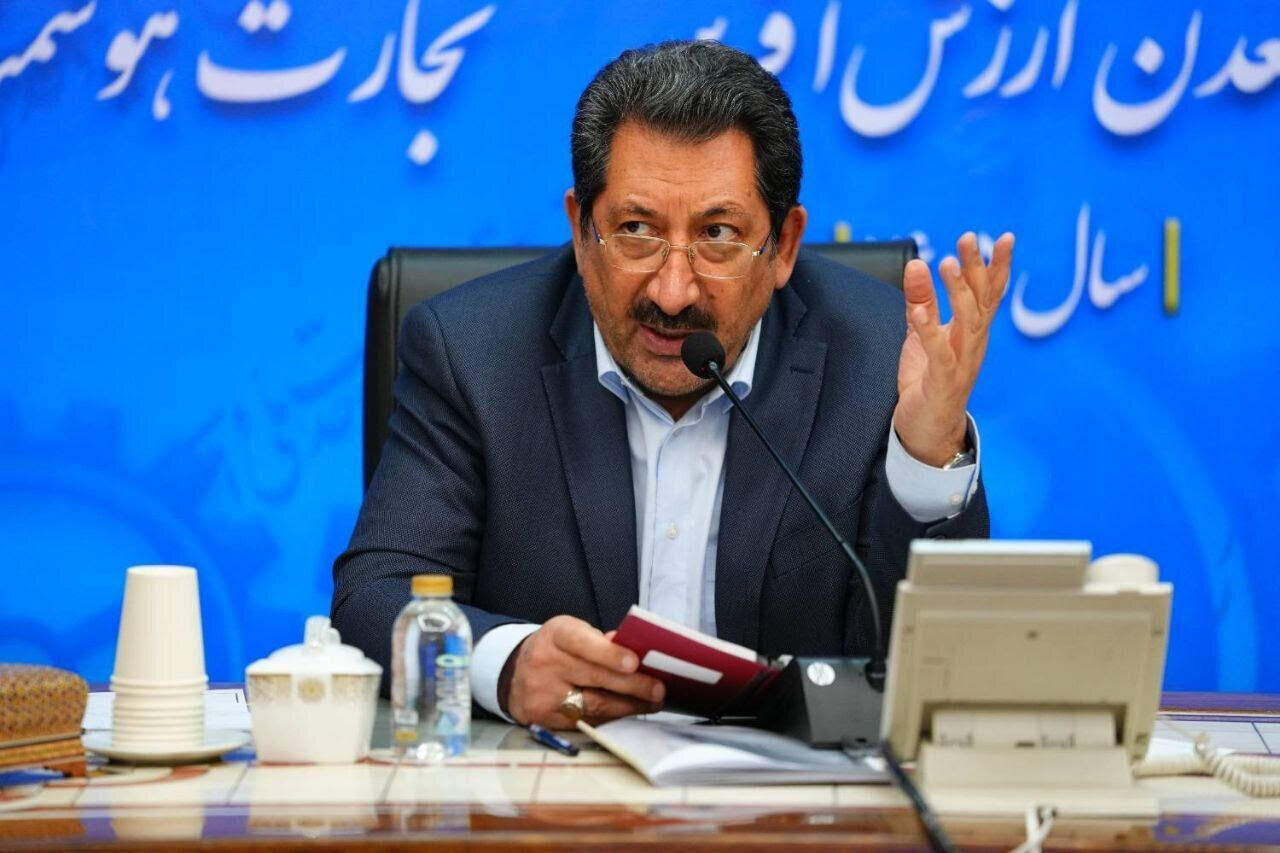
TEHRAN- The Minister of Industry, Mining, and Trade, emphasizing that capital and facilities must be directed toward production, stated that industrial and production units need liquidity to revive and sustain their production lines.
According to a report by IRNA from the Ministry of Industry, Mining, and Trade, Seyyed Mohammad Atabak said in a meeting with members of the Economic Committee of the Islamic Consultative Assembly: "The priority of this ministry is to support small and medium-sized units, and these units are the driving engine of employment in the country."
Referring to a package to support industries, he emphasized: "Prioritization of industries has been carried out based on national necessities, and the allocation of credits is also based on this."
The Minister of Industry, Mining, and Trade added: "These facilities must be used to keep the wheels of production turning. Therefore, a change in approach to liquidity management and credit distribution must be considered so that the industrial sector can secure raw materials for production."
Stating that without injecting large-scale liquidity and fundamentally solving the problems of the industrial sector, production units will face difficulties, he clarified: "In this regard, we need the cooperation of the Islamic Consultative Assembly and relevant institutions, including the Central Bank."
Atabak emphasized facilitating the clearance of goods and reminded: "We are pursuing the demands of the private sector in the economic committee of the Central Bank to accelerate clearance by removing obstacles."
Revival of maritime industries with focus of IDRO
Referring to the revival of maritime transport by the Industrial Development and Renovation Organization of Iran (IDRO), he emphasized: "Investments for repairs and reconstruction of ocean-going ships and marine vessels are vital. These infrastructures must be revived by injecting special credits into the Maritime Industries Development Fund with IDRO as the focal point."
The Minister of Industry, Mining, and Trade announced the supply of steel sheets by Mobarakeh Steel Company and added: "This company is responsible for supplying steel sheets to downstream and affiliated companies through imports at the approved price of the Organization for Protection of Consumers and Producers. Issuing this permit to Mobarakeh Steel supports production and preserves employment in related industries. Of course, alongside imports, we are also pursuing increasing domestic steel production capacity."
He referred to the efforts made by the Ministry of Industry, Mining, and Trade to regulate the market under wartime conditions and continued: "The status of goods in the market and price control are reviewed weekly with the presence of deputies and the participation of trade and business guild chambers."
Atabak also expressed hope that with jihadi management, serious coordination and cooperation among institutions, and interaction with the private sector, calm will continue to prevail in the market.
On April 19, the Deputy Secretary of the Tehran Provincial Council for Dialogue between Government and the Private Sector has announced an examination of the challenges and crises caused by the war in the trade sector, aiming to expedite the processes of order registration and import of essential goods.
According to IRNA from the Iran Chamber of Commerce, Hooman Hajipour, referring to a joint meeting attended by the head of the Trade Promotion Organization, as well as Mohammad-Reza Ghafrollahi (head of the Trade Facilitation and Development Committee) and Ahmad-Reza Farshchian (member of the Tehran Chamber's Board of Representatives and head of the Import Committee of the Iran Chamber), stated that 10 proposals and solutions have been put forward to accelerate the supply of goods and provide access to raw materials for production units.
Hajipour explained that "facilitating trade processes through interaction with state institutions and via the Government-Private Sector Dialogue Council is being pursued," adding that during the meeting with the head of the Trade Promotion Organization, trade barriers and import-export challenges—especially under current conditions, as the country has endured a 40-day war—were reviewed.
According to Hajipour, it was agreed in the meeting to reduce unnecessary administrative processes and review certain systems. Responsibility for some of these trade systems lies with the Trade Promotion Organization, while others fall under the currency working group of the Central Bank.
Hajipour noted that in the current situation, it is necessary to change the origin, destination, and entry customs points in some cases, and these changes require system updates.
He added that based on negotiations with the managers of the Trade Promotion Organization, it was decided that for the import of essential industrial goods, the origin, destination, and entry customs point can be edited without requiring approval, system waiting periods, or currency optimization reviews.
According to the Deputy Secretary of the Tehran Provincial Council for Dialogue between Government and the Private Sector, outstanding order registrations from the past Iranian year 1404 (ended on March 20) for importers—especially those who achieved a certain percentage of customs clearance last year—will be exempt from systemic quota restrictions and currency optimization limits.
Hajipour also announced the extension of order registrations until May 30, 2026, and stated that for order registrations from the year 1404 that achieved 90% customs clearance, efforts have been made to allow the remaining 10% to be cleared against a letter of guarantee, considering the wartime situation and related issues.
He stated that under the current circumstances, the priority right for registering orders for 2,800 essential industrial goods will be removed, and the waiting time in the currency allocation queue will be added to the validity period of the order registration.
He emphasized that given the necessity of securing goods and boosting exports, if importers of the 2,800 essential industrial goods use foreign currency obtained from their own or others' exports, they will be taken out of the currency allocation queue. This also applies to order registrations that have already expired.
Hajipour further said that it was also agreed that the 2,800 essential industrial goods, if available in customs warehouses, would be removed from the order registration queue. Furthermore, if these goods are covered by the annual quota, they will be placed in the customs clearance queue; otherwise, they will be cleared through import without currency transfer.
Highlighting the importance of securing raw materials for production units, he said that reviewing the quotas of production units was another topic discussed in the meeting with the head of the Trade Promotion Organization. Due to the damage inflicted on certain industries—including steel and petrochemicals—during the recent war, it is essential to secure raw materials for production units that were previously produced domestically through imports. Therefore, it is necessary to seriously review the quotas of production units and take this consideration into account when determining the currency needs of production units.
Meanwhile, in a joint meeting between the Ministry of Agriculture and regulatory bodies as well as private sector associations, on April 16, issues related to the supply chain of essential goods were reviewed.
According to Mehr News Agency, a meeting to examine and determine mechanisms for supplying essential goods from the northern ports was held at the Ministry's headquarters, attended by the deputy ministers of agriculture, representatives from relevant regulatory bodies, and production and trade associations from the agricultural sector.
During this session, topics such as increasing silo storage capacity, improving the performance of systems, the necessity of strengthening the private sector and enhancing its financial capacity and trust, increasing port facilities and reducing warehousing costs, avoiding parallel work in the goods clearance process, import in exchange for export, as well as managing fuel supply for machinery and managing transportation costs, were discussed and reviewed.
Iran's Customs Administration announced in a statement that during the 39 days of the imposed American-Zionist war against the country, customs clearance procedures for 2,874,000 tons of essential goods were completed at the country's customs offices and dispatched.
MA
Leave a Comment